Upcycling Old Textiles: What to Make from Unwanted Shirts, Jeans and Towels
An old shirt with a worn collar, jeans that no longer fit or a towel that has lost its softness do not automatically belong in the bin. Many household textiles still contain large areas of perfectly usable fabric even when they have stopped serving their original purpose. Turning them into bags, cleaning cloths, cushion covers, organisers or other practical items can extend the useful life of the material without requiring specialist equipment. This matters because textile consumption remains high: the latest comparable EU figures show average consumption of clothing, footwear and household textiles at 19 kg per person in 2022, while around 6.94 million tonnes of textile waste were generated in the same year. Since 2025, EU countries have also been required to provide separate collection for used textiles, making reuse and responsible sorting increasingly important parts of everyday waste management.
Old Shirts Can Become Useful Household Items
Shirts are among the easiest garments to reuse because they usually contain several broad sections of lightweight woven fabric. Cotton and cotton-rich shirts are particularly convenient for sewing, but linen, flannel and many blended fabrics can also be reused. Before cutting anything, check the front panels, back, sleeves, cuffs and pockets separately. A damaged collar or a stain near the buttons does not necessarily affect the rest of the garment. Removing buttons first is useful because they can be stored for later repairs or craft projects rather than being discarded with the scraps.
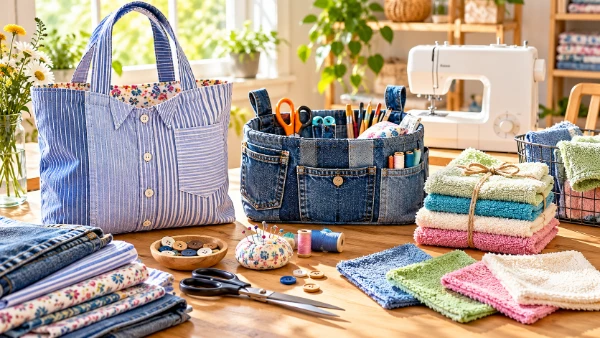
One of the simplest uses for a large shirt is a reusable shopping or storage bag. The front and back provide enough fabric for two main panels, while stronger sections from the sleeves can be turned into handles. A buttoned front can even remain part of the design, although the opening should be stitched securely if the bag will carry groceries. Thicker cotton shirts work better for shopping bags, whereas lighter fabrics are more suitable for bread bags, laundry bags, shoe bags or drawstring pouches used inside suitcases and wardrobes.
Shirt fabric can also be converted into cushion covers, fabric napkins, handkerchiefs, patchwork pieces or small organisers. Existing features often save work: a chest pocket can become a ready-made compartment on a hanging organiser, and button plackets can provide a closure for a cushion cover. Smaller pieces that are too irregular for sewing larger items are still useful for patching other clothing. Keeping a small selection of matching cotton offcuts is often more practical than buying new fabric whenever a pocket, knee or elbow needs reinforcement.
Prepare Shirt Fabric Before Cutting and Sewing
Wash and dry an old shirt before starting a project, even if it appears clean. Stored clothing can contain dust, perfume residue or marks that become more obvious once the fabric is cut. Washing also helps reveal whether the material is still stable. Fabric that tears easily when gently pulled may not be suitable for a bag or cushion that will be placed under strain, but it can still be cut into soft dusting cloths. Areas around underarms, cuffs and collars tend to wear first, so inspect them carefully.
Cutting along existing seams is usually the easiest way to obtain usable panels. A seam ripper is helpful when a neat edge matters, but ordinary fabric scissors are enough for many home projects. Leave a small allowance around the section you intend to sew rather than cutting precisely to the finished dimensions. Natural woven fabrics can fray, so exposed edges may need a simple hem, zigzag stitch or enclosed seam. For a no-sew project, choose uses where fraying is not a problem, such as cleaning cloths or stuffing material.
It also makes sense to match the project to the condition of the fabric. A crisp cotton shirt can become napkins or a lightweight bag; thick flannel makes useful reusable cleaning cloths; a patterned shirt may provide attractive patches for plain garments. Synthetic or blended shirts can still be reused, but they may respond differently to high heat, ironing and sewing. Checking the care label before applying an iron or hot adhesive avoids damaging fabric whose fibre content is uncertain.
Worn Jeans Provide Strong Fabric for Hard-Working Projects
Denim is valuable for reuse because it is substantially stronger than most shirt fabrics. Even jeans with worn knees, damaged hems or a broken zip often retain large sound sections across the thighs, lower legs and back. These pieces are suitable for projects that need abrasion resistance, including tote bags, tool rolls, storage baskets, protective patches and simple aprons. Before cutting, remove metal hardware that may interfere with scissors or a sewing machine, but keep usable buttons, rivet-free pockets and belt loops where they can form part of the new item.
The back pockets are particularly useful because they are already finished on several sides. They can be sewn onto a larger piece of fabric to make wall storage for pencils, cables, gardening tools or craft supplies. Several pockets from different pairs of jeans can be arranged on a sturdy backing to create an organiser. Belt loops can hold hooks or cords, while long strips cut from the legs can become straps. These small details reduce the amount of new material needed and give heavily worn jeans a practical second use.
Large denim panels are also suitable for bags and cushion covers. For a tote, the lower legs can supply long rectangular sections with existing side seams, which reduces sewing. Layers of denim can be used for coasters, pot holders or protective mats, although heat-related items should only be made when the fibre composition is known and suitable. Pure cotton denim is preferable around hot cookware; stretch jeans often contain elastane and should not be treated in the same way as heavy traditional denim.
Work with Denim According to Its Weight and Condition
Denim can be harder to sew than a shirt because several folded layers become thick quickly. Domestic sewing machines usually cope with ordinary denim when fitted with an appropriate denim or jeans needle, but bulky intersections should be kept to a minimum. A project does not need complicated construction to be durable. Flat seams, simple rectangular shapes and reused pockets are often enough for bags and organisers, particularly for someone with limited sewing experience.
Examine worn areas rather than assuming every faded section is weak. Denim frequently loses colour long before the fibres fail. Hold the fabric up to the light and gently pull it in different directions. Thin areas that separate or show obvious gaps are better used for decorative patches than structural parts. Stronger sections can be placed at the base of a bag, around handles or wherever an item will bear weight. This simple check prevents a project from failing soon after it is finished.
Repair can sometimes be a better option than cutting jeans apart. WRAP research published before 2026 found that repaired clothing can directly replace a substantial share of new purchases; its 2025 analysis estimated that roughly four out of five repaired items displaced the purchase of a new item. The same research estimated that choosing a second-hand pair of jeans instead of a new pair could avoid more than 30 kg CO2e under the study assumptions. If jeans remain wearable, patching a knee or reinforcing an inner thigh can therefore preserve more value than immediately converting the garment into something else.
Old Towels Still Have Plenty of Practical Uses
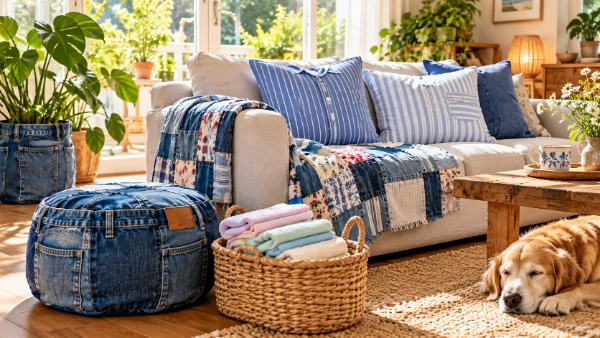
Towels usually become unwanted because they feel rough, look faded or have damaged edges, not because the entire fabric has become unusable. Their absorbency makes them particularly suitable for household reuse. A large bath towel can be cut into cleaning cloths for kitchens, bathrooms, windows, bicycles or garden equipment. Unlike disposable paper, washable cloths can be used many times. Cutting around badly worn sections first gives stronger pieces that are less likely to fall apart during washing.
Larger pieces can become washable floor cloths, pet towels, bath mats or protective pads for storage and moving. A towel placed between fragile household items can reduce scratching, while smaller rectangles are convenient for drying muddy shoes or wiping garden tools. If the edges shed loops after cutting, hemming them will extend their life. An overlocker is not essential; a folded edge secured with a straightforward machine stitch is sufficient for most practical household uses.
Soft towelling also works for reusable face cloths, make-up removal pads and washable cleaning mitts, provided the material is clean and still comfortable against the skin. These items should be made from sections without stubborn stains, mildew or an unpleasant smell. Towels affected by mould should not be repurposed for personal-care products because washing may not make damaged material suitable for prolonged skin contact. When hygiene is uncertain, use the sound sections only for rough cleaning jobs or send the textile through an appropriate local collection route.
Choose Reuse, Donation or Textile Collection According to Condition
Not every unwanted textile should be cut up. A clean shirt that is still wearable or a pair of jeans in good condition normally has greater value as clothing than as craft material. Donation, resale, swapping and repair keep the original product in use with less work. WRAP’s current circular-textiles work treats repair, resale, rental and upcycling as complementary ways of extending product life rather than interchangeable solutions. Its 2026 analysis notes that these approaches can reduce the environmental footprint associated with clothing compared with conventional purchasing, although the effect varies by product and behaviour.
Upcycling is most useful in the middle ground: the item is no longer suitable for normal use, yet enough sound material remains to make something functional. Towels with one torn edge, shirts with damaged collars and jeans with worn knees are good examples. Very dirty, contaminated, mould-damaged or severely degraded textiles may not be suitable for household projects. Local collection rules should be checked before disposal because collection services differ, and some schemes accept worn-out textiles while others are intended mainly for reusable clothing.
The aim is not to save every scrap indefinitely but to use material sensibly before buying something new. A shirt turned into a laundry bag, denim reused for repairs and an old towel cut into cleaning cloths can each replace products that would otherwise have to be purchased. The habit becomes easier when textiles are sorted by condition: wearable items for continued use, sound fabric for repair or upcycling, and unusable material for an accepted textile-collection route. That approach keeps useful fabric working for longer while avoiding cupboards filled with items that have merely been moved from one form of storage to another.